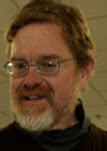
Josh White Jr patiently waited while we futzed with equipment and tried to get him on live for a phone interview. Sadly we did not broadcast our conversations but I can tell you that Josh White Jr. is an interesting,gracious and very patient man.
He will be in the area at Passim in Cambridge MA www.clubpassim.org/passimcalendar/
JOSH WHITE, JR. Biography
JOSH WHITE, JR. (secular, folk/blues, pop, jazz, vocalist, guitarist, songwriter, actor, adult and children's concert performer and recording artist, teacher and social activist).
Born November 30, 1940, in New York City, one of five children, to Joshua Daniel White, famed singer/guitarist/actor/social leader, and his wife Carol (nee Carr).
Josh White, Jr., became, a 'hit' literally over night at the age of four, by performing with his legendary father JOSH WHITE one night at New York's famed "Café Society" night club (America's first integrated nightclub). For the next five years, Josh, Jr. performed with his father from New York to Boston to Philadelphia. In 1949, Josh, Jr. landed his first role on Broadway, and as Josh says, "It was type casting..." he played his father's son in How Long Til Summer? with Dorothy Gish and Don Hanmer. While continuing a solo acting career, Josh went on to perform and record with his father for the next seventeen years on radio, television, Broadway, concert halls and nightclubs around the world.
Josh attended New York's famed Professional Children's School, along with Elliott Gould, Sandra Dee, Brandan de Wilde, Leslie Uggams, Christopher Walken, and, among others, Marvin Hamlisch, who co-wrote Josh's first solo recording for Decca in 1956, "See Saw".
Between the years 1949 and 1960 Josh was in five Broadway plays and one off-Broadway play: "How Long Til Summer," in which he was honored with a Special TONY AWARD as "Best Child Actor" of the year in 1949; "The Man," with Josh White, Sr. (1950); "Touchstone" (1955); "Take A Giant Step" (1957) (the popular, long-running Off-Broadway play, in which he was the third person to take over the starring role, following Billy Gunn and Josh's friend Lou Gossett); "Only In America" (1959) starring Nehemiah Persoff; and "The Long Dream," (1959) book by Richard Wright, directed by Lloyd Richards, whose cast included Al Freeman, Jr. and newcomer Clarence Williams III. Some other actors he shared the stage with in these plays were Arthur O'Connell, Godfrey Cambridge, Patty McCormick, Beah Richards.
By 1961 Josh had already Guest Starred in more than 50 American Television Dramas, and costarred with his father in Great Britain for North Grenada television in "The Josh White Show." However, as he was approaching his 21st birthday, the number of acting jobs available on Broadway, TV and film for young Black actors was limited, while musically, the Folk Revival in America was beginning to take storm and offer more lucrative opportunities. Accordingly, Josh decided to focus on his career as a singer/guitarist, put his acting career on hold, and branch out from his long association with his father, to go on the road alone to pursue his solo concert and recording career.
After the 1956 Decca Records release of "See Saw", and after more recordings with his father (such as "Josh White at Town Hall" 1960), Josh, Jr.'s solo recording career continued with "Do You Close Your Eyes" - Mercury 1962, (which is a "golden oldie" in the Pittsburgh area to this day); "Good & Drunk & Goozey" (with sister, Beverly White) - Sonnet 1963; "I'm On My Own Way" - Mercury 1964; "The Josh White, Jr. Album" - United Artists 1967; "One Step Further" - United Artists 1968; Spoken Arts multi-media production, "The Dream Awake" with James Earl Jones, Josh White, Jr. and Josephine Premice, an educational aid complete with film strips, teacher guide and seven long-playing recordings containing performances by the cast, with an original text by Owen Dodson; "Josh White, Jr." Vanguard 1978; "Sing A Rainbow" - Mt. Railroad 1979, "Josh White, Jr. Sings Traditional Folk Songs" - National Archives 1980; the 1980 recordings of "The Strangest Dream" and "The King's Highway" (official Theme Song recordings for the "Peace Corps" and "VISTA" - both composed by his old friend Ed McCurdy); "May The Brush Be With You" (with Jimmy Carter, Frank Sinatra, Muhammad Ali & Lily Tomlin) - Cornucopia 1981; "Delia's Gone" - FFMM 1983; "Almost Alone" - Eagle 1984; "Jazz Ballads & Blues" (GRAMMY nominated instrumental jazz album tribute to his father) - RYKODISK 1986; "Live at the Soft Rock Café" - RTG/Oceansong 1990; "My Favorite Toy" (children's album) - Coden/White Records 1994; plus numerous appearances on festival, compilation and tribute albums; the recent "House of The Rising Son" (Silverwolf 1999) "Cortelia Clark" (Silverwolf 2001) and "Josh White, Jr. - LIVE" (Silverwolf, 2003)
After appearing on countless television variety and talk shows around the world as a solo artist, including such American shows as "Today," "Merv Griffin," "Steve Allen," "Joey Bishop," " Mike Wallace," "Mike Douglas," " Della Reese," "Gary Moore," "Arthur Godfrey," "Kate Smith," "Donald O'Connor," and "Hootenany," Josh, Jr. starred in his first PBS/TV Concert Special in 1979 "Ramblin" with Josh White, Jr.", and costarred (with Odetta, Tom Paxton, and Bob Gibson) in the 1980 "Soundstage - Just Folks" Concert TV Special, followed by two more PBS/TV Specials: "The Making of JOSH: The Man & His Music" 1984, and "Josh and Ron's Family Adventure", 1993, with Ron Coden. Josh Jr.'s composition "Say A Prayer For A Stranger" was performed by Harry Belafonte on the ABC-TV prime-time Special, "100 Years at The Music Hall."
As a concert artist, Josh, Jr. has performed on the world's greatest stages of four continents, including Kennedy Center, Carnegie Hall, Lincoln Center, Odeon Hammersmith Hall, Berlin Philharmonic Hall, and Madison Square Garden to name a few.
From 1963 through the 80s, Josh headlined more than 2000 college concerts. At the peak of this folk boom, in the mid 60s through the late 70s, Josh was considered one of NACA's most celebrated and honored performing artist. C. Shaw Smith, from Davidson College, North Carolina, penned him the 'Dean of College Concert Attractions'.
Josh returned to the theatrical stage in 1983, in his first musical - a musical revue - "One for Me, One for You". An original regional theater production, with all of the songs written by his good friend Mayon Weeks who was also one of the performers. In 1983, he premiered the musical dramatic biography of his father Josh White, Sr., entitled "JOSH: The Man & His Music" (written and directed by Broadway veteran Peter Link) to 'rave reviews' at the Center for the Arts, Boarshead Theater, in Lansing, Michigan, for a five-week, sold out, limited-run engagement. Every few years Josh, Jr. reprises the play on the road with great success and is proud to maintain the image, story and songs that his father gave us all. Josh also sang "The John Henry Suite", as Guest Star with the "Dance Theatre of Harlem" in a limited tour which took him from New York to San Francisco with one of the stops at the Kennedy Center in Washington, D.C.
Josh, Jr.'s marriage in 1963 to Jackie Harris produced two children - Joshua 'Buddah' White III, an actor/playwright born in 1963, and Jason, born in 1969. In November, 1971, following the death of his wife and just two years after the death of his father, Josh, Jr. left New York City, and moved to upstate New York with his two sons and slowed down his touring. During that time, he established an artist-in-residence program at many college campuses he performed at during the regular school year so he, his sons and their Malamute, Robin, could spend their summers together. Josh White, Jr. moved to Detroit in 1976 and married Sara in 1978. Sara brought four children to the marriage and Josh brought two. Their children, now all adults, have blessed Josh and Sara with 13 grandchildren.
Josh White, Jr. received Honorary Doctorate Degrees from the University of Maine, and the University of West Florida; was named the "Voice of The Peace Corps" and "Voice of VISTA" by the US Government in 1980; in 1982, he shared the stage with his mother at the Smithsonian Institution's 100th Birthday Celebration of Franklin Roosevelt. In 1983, he was presented with "Keys to the City" by Detroit and Lansing, Michigan, and on April 20, 1983, the State of Michigan honored he and his father with "JOSH WHITE and JOSH WHITE, JR. DAY"; in 1984, he was named "Michigan Man of The Year;" in 1984, NACA (National Association of Campus Activities) honored Josh with its first "Harry Chapin Humanitarian Award" at Opryland in Nashville; in 1987, he was honored to be named the Host and Emcee for the final two legs of festivities for Pope John Paul II's grand tour of America. In earlier years, he also appeared with his father at President Johnson's Inauguration and at a Command Performance for the Prime Minister of Canada. In July, 1997, Josh was the Special Guest Star Performer at the National Community Service Conference's Annual Banquet in New York honoring cofounder of the Peace Corps, Harris Wolford, with its Lifetime Achievement Award; Josh performed "Last Night I Had The Strangest Dream", the Peace Corps Theme Song he had recorded for Mr. Wolford and Sargent Shriver years earlier.
In recent years, Josh, Jr. has added to his multi-dimensional talents and touring schedule, by becoming a "single-digit" (as he calls it) performer, doing children and family concerts, including school concerts for grades K-4. And with the release of the U.S. Postal Service's stamp honoring his father (and Leadbelly, Woody Guthrie and Sonny Terry) he does a music/lecture session on his father, Josh, Sr. for grades 5 through 12. He provides an extraordinary, interactive experience for young people.[Read comments from some of the schools.] He has appeared many times on the Nickelodeon Network and he along with his good friend, Ron Coden, hosted their own PBS special, "Josh and Ron's Family Adventure."
In 1991, Josh teamed up with the founder of “StoryLiving,” Rändi Douglas, to create a highly successful outreach alternative educational program now called “Living History.” The program’s purpose is to teach history and social studies using multiple interactive intelligence systems, and as Josh says, “It is where you become the people you are learning about and then when you become emotionally involved, you never forget.” And all this happens in the classroom with music, imagination and role-playing. Sessions are held in schools, universities, churches, temples, community centers and at seminars.
SOME MEMORABLE CONCERTS. . .
In 2006, Josh appeared at the African-America Music Foundations’ First Annual Spirituals Festivals; at San Diego State University’s Tribute Concert to Josh White (Sr.) for their Black History Month; and at the Black History Month tribute to his father at the Franklin D. Roosevelt Presidential Library & Museum in Hyde Park, New York, where he used to play as a boy when it was the home of Franklin & Eleanor Roosevelt. In 2004, he celebrated his father’s music at the Montreal Jazz Festival. In 2002, he joined Judy Collins, Pete Seeger, Odetta, John Sebastian, David Amram, John Hammond,Jr., Bethany Yarrow (Peter’s daughter), John Sebastian and Oscar Brand at New York’s Cooper Union Theatre for the fund and conscious-raising concert to establish the “Folk Music Museum” in New York’s Greenwich Village City, from which came the Bitter End Records’ compilation album "The Folk Music Museum in Greenwich Village" where he performed “The Strangest Dream” and “Southern Exposure.” In 2001, he co-starred with Odetta, Ramblin’ Jack Elliott, Richie Havens, Tom Paxton and Oscar Brand in the National PBS-TV Tribute Special to Woody Guthrie, “Woody & Me.” In 2000, he was chosen as the sole performer representing the State of Michigan (his home state) on the Millennium stage at Washington’s Kennedy Center, celebrating “Michigan State Day.” On June 26, 1998 Josh gave a Tribute Concert to his father on the National Mall in Washington, D.C., celebrating the unveiling of the first American Folk Artists 32¢ stamp, sponsored by the United States Postal Service and the Smithsonian Institute - honoring Josh White, Sr., Leadbelly, Woody Guthrie and Sonny Terry, followed by other Stamp Tribute Concerts in Boston and Philadelphia. IN 1995, he co‑ starred with (sister) Beverly White, Pete Seeger, Odetta, Peter Yarrow, Richie Havens, Tom Paxton, Arlo Guthrie and Oscar Brand in a 'live' radio concert at New York's Cooper Union Theatre, celebrating Oscar Brand's 50th Anniversary radio show "Folk Song USA" on WNYC Radio. IN 1994, he co-starred with Burl Ives (in his last concert performance), Pete Seeger, Art Garfunkle, Theodore Bikel, Tom Paxton, Oscar Brand and the Chad Mitchell Trio at New York's "92nd Street Y's 50th Anniversary Folk Festival," and later that year was a co‑sponsor/co‑host (with Peter Yarrow) at Chicago's Park West Theatre, where a cast of folk stars performed in a Tribute Benefit Concert for folk legend Bob Gibson before his passing. He also felt a privilege of appearing with Ray Charles at the Peace Center Theatre in Greenville, South Carolina — the birthplace of his father, Josh White (Sr.).
Wednesday, October 17, 2007

Elijah Wald's book on Josh White, Sr.
Josh White: Society Blues
was published in Fall, 2000, by University of
Massachusetts Press.
"I learned things about Josh White from this detailed biography that I never knew. Elijah Wald has done a fine job. This is a more complete and fair book than I would have believed possible." -- Pete Seeger
"Complete, well written, and in-depth. Highly recommended."
-- Library Journal
"Wald deftly describes White's repertoire and that of his contemporaries, giving an immediacy to the music culture that surrounded him. The reader follows White as he maneuvers through the complexities of race, politics, and popular music. With White as its focal point, Society Blues provides a glimpse of the interaction between twentieth-century American society and its vernacular musics... that lucky combination of a writer who knows his topic, knows what story he wants to tell, and possesses the tools to tell that story."
--Tod Harvey, The Journal of American Folklore
was published in Fall, 2000, by University of
Massachusetts Press.
"I learned things about Josh White from this detailed biography that I never knew. Elijah Wald has done a fine job. This is a more complete and fair book than I would have believed possible." -- Pete Seeger
"Complete, well written, and in-depth. Highly recommended."
-- Library Journal
"Wald deftly describes White's repertoire and that of his contemporaries, giving an immediacy to the music culture that surrounded him. The reader follows White as he maneuvers through the complexities of race, politics, and popular music. With White as its focal point, Society Blues provides a glimpse of the interaction between twentieth-century American society and its vernacular musics... that lucky combination of a writer who knows his topic, knows what story he wants to tell, and possesses the tools to tell that story."
--Tod Harvey, The Journal of American Folklore
Friday, October 5, 2007
Topical Songs 2007 OCT 11 wicn.org= Roy Zimmerman and Robert Zimmerman and others...
Bob Dylan in 1964
David Masengill, live in 2007
Wednesday, October 3, 2007
Home movie Rufus, Martha, Kate and memé?
Rufus and Martha spoof on mom and aunty
Kate McGarrigle and Anna McGarrigle are sisters who write and perform together. They were born of Canadian and Irish parents in Saint-Sauveur-des-Monts, northwest of Montreal, and educated at a Roman Catholic convent school. Their careers in music began with the 1960s folk combo Mountain City Four, in conjunction with Jack Nissenson and Peter Weldon.
Their songs have also been covered by a variety of other artists, including Maria Muldaur, Linda Ronstadt, Emmylou Harris, Billy Bragg, Chloé Sainte-Marie and Anne Sofie von Otter. Although associated with Quebec's anglophone community, the McGarrigles have also recorded and performed many songs in French. Two of their albums, Entre Lajeunesse et la sagesse (also known as French Record) and La vache qui pleure, are entirely in French, but many of their other records include one or two French songs as well. Most of their French songs have been co-written by Philippe Tatartcheff, with occasional input from Kate McGarrigle's son, Canadian-American solo artist Rufus Wainwright. Rufus and his sister Martha Wainwright, also a singer, are the children of Kate and her former husband, singer-songwriter Loudon Wainwright III.
Their version of Wade Hemsworth's song, "The Log Driver's Waltz" grew famous as the soundtrack for a 1979 animated film by the National Film Board.
They provided backing vocals on Nick Cave and the Bad Seeds's 2001 album No More Shall We Part.
Another sister, Jane McGarrigle, is a film and television composer who has written and performed several songs with the duo.
They were appointed Members of the Order of Canada in 1993 and received the Governor General's Performing Arts Award in 2004.
They appear in the 2006 Leonard Cohen tribute film Leonard Cohen: I'm Your Man. Cohen, like them, originates from Montreal.
Kate, Anna and Emmy Lou + many more sing Hard Times
Your Mother and I Loudon WainwrightIII
Happy families are all alike; every unhappy family is unhappy in its own way.
Leo Tolstoy, Anna Karenina, Chapter 1, first line
Russian mystic & novelist (1828 - 1910)
Saturday, September 22, 2007
Joan in 1960s
This is a clip from the Concert/Film "The Big TNT Show"
which also features Ray Charles, Ike & Tina,
Donovan, The Lovin' Spoonful, The Ronettes and Man From UNCLE David MacCollum.
Some "skips" in the tape but if you stick with it, you will be glad.
in 1969 on Italian TV
which also features Ray Charles, Ike & Tina,
Donovan, The Lovin' Spoonful, The Ronettes and Man From UNCLE David MacCollum.
Some "skips" in the tape but if you stick with it, you will be glad.
in 1969 on Italian TV
Friday, September 21, 2007
Still singing and touring ~ Joan Baez
http://joanbaez.com/tourschedule07.html
But here she is in 1975
Joan Chandos Baez (born January 9, 1941) is an American folk singer and songwriter known for her highly individual vocal style. She is a soprano with a three-octave vocal range[1] and a distinctively rapid vibrato. Many of her songs are topical and deal with social issues.
She is best known for her 1970s hits "Diamonds & Rust" and "The Night They Drove Old Dixie Down" -- and to a lesser extent,"We Shall Overcome" "Sweet Sir Galahad" and "Joe Hill" (songs she performed at the 1969 Woodstock festival). She is also well known due to her early and long-lasting relationship with Bob Dylan and her even longer-lasting passion for activism, notably in the areas of nonviolence, civil and human rights and, in more recent years, the environment. She has performed publicly for nearly 50 years, released over 30 albums and recorded songs in over eight languages. She is considered a folksinger although her music has strayed from folk considerably after the 1960s, encompassing everything from rock and pop to country and gospel. Although a songwriter herself, especially in the mid-1970s, Baez is most often regarded as an interpreter of other people's work, covering songs by Bob Dylan, The Beatles, Jackson Browne, Paul Simon, The Rolling Stones, Stevie Wonder and myriad others. In more recent years, she has found success interpreting songs of diverse songwriters such as Steve Earle, Natalie Merchant and Ryan Adams.
in 1966
But here she is in 1975
Joan Chandos Baez (born January 9, 1941) is an American folk singer and songwriter known for her highly individual vocal style. She is a soprano with a three-octave vocal range[1] and a distinctively rapid vibrato. Many of her songs are topical and deal with social issues.
She is best known for her 1970s hits "Diamonds & Rust" and "The Night They Drove Old Dixie Down" -- and to a lesser extent,"We Shall Overcome" "Sweet Sir Galahad" and "Joe Hill" (songs she performed at the 1969 Woodstock festival). She is also well known due to her early and long-lasting relationship with Bob Dylan and her even longer-lasting passion for activism, notably in the areas of nonviolence, civil and human rights and, in more recent years, the environment. She has performed publicly for nearly 50 years, released over 30 albums and recorded songs in over eight languages. She is considered a folksinger although her music has strayed from folk considerably after the 1960s, encompassing everything from rock and pop to country and gospel. Although a songwriter herself, especially in the mid-1970s, Baez is most often regarded as an interpreter of other people's work, covering songs by Bob Dylan, The Beatles, Jackson Browne, Paul Simon, The Rolling Stones, Stevie Wonder and myriad others. In more recent years, she has found success interpreting songs of diverse songwriters such as Steve Earle, Natalie Merchant and Ryan Adams.
in 1966
Tuesday, September 18, 2007
The Phil Ochs FBI File
Folk Singer for the FBI: The Phil Ochs FBI File
by Federal Bureau of Investigation
Description: Hard to believe and who knows what they [FBI et alia] do these days.
Phil Ochs was one of the greatest political and topical folk singers of the 1960s. Ochs was first investigated by the Federal Bureau of Investigation (FBI) early on in his career, after writing a favorable article on Woody Guthrie in Mainstream magazine in 1963, which also brought another name to the attention of the FBI: Bob Dylan. The FBI attended political rallies where Ochs played, and he began noticing the attention, telling an audience in 1966: “I’m a folk singer for the FBI.” The FBI’s investigation intensified after the DNC riots in Chicago in August 1968. The FBI attempted to build a case against Ochs and other members of the Youth International Party (Yippies), but the indictment against Ochs never materialized due to a lack of evidence. Ochs instead later testified at the Chicago Seven trial for the defense. Despite the hundreds of pages in his FBI file, Ochs never committed a federal crime. He continued to be under investigation until his death by suicide in 1976.
by Federal Bureau of Investigation
Description: Hard to believe and who knows what they [FBI et alia] do these days.
Phil Ochs was one of the greatest political and topical folk singers of the 1960s. Ochs was first investigated by the Federal Bureau of Investigation (FBI) early on in his career, after writing a favorable article on Woody Guthrie in Mainstream magazine in 1963, which also brought another name to the attention of the FBI: Bob Dylan. The FBI attended political rallies where Ochs played, and he began noticing the attention, telling an audience in 1966: “I’m a folk singer for the FBI.” The FBI’s investigation intensified after the DNC riots in Chicago in August 1968. The FBI attempted to build a case against Ochs and other members of the Youth International Party (Yippies), but the indictment against Ochs never materialized due to a lack of evidence. Ochs instead later testified at the Chicago Seven trial for the defense. Despite the hundreds of pages in his FBI file, Ochs never committed a federal crime. He continued to be under investigation until his death by suicide in 1976.
Sunday, September 16, 2007
Phil Ochs on folk music - circa 1969

"Before the days of television and mass media, the folksinger was often a traveling newspaper spreading tales through music. There is an urgent need for Americans to look deeply into themselves and their actions, and musical poetry is perhaps the most effective mirror available. Every newspaper headline is a potential song."
- Phil Ochs
And Phil put this in his liner notes:
"A pamphlet, no matter how good, is never read more than once, but a song is learned by heart and repeated over and over." -- Joe Hill
Live music by Phil Ochs - keeping it real
History of Phil Ochs Song Nights from http://www.sonnyochs.com/
On April 9, 1976 my brother, Phil Ochs, ended his life by hanging himself. He was 35 years old. He had written over 100 songs, and had traveled to many countries. He suffered from manic-depression and had been experiencing a long term writer's block.
I had moved up to the Albany area in '86, so I decided to move the Song Night upstate so as not to have to travel to the city anymore. In 1987 the Song Night was held for the first time at the Eighth Step Coffeehouse on Nov. 6th, and it was held there every year until 1999 except once when there was a date mix-up, and it had to be held elsewhere in the Capitol District. That same year we did a Song Night in Philadelphia.
Up to this point all the Song Nights had the same formula. Each performer would sing one or two of Phil's songs, depending on how many they knew, and that was it. The philosophy behind Song Night was to keep Phil's music alive, to give all the monies collected to organizations in the folk field who were struggling financially, and to showcase performers. Money was given to groups like People's Music Network, Broadside Magazine, Sing Out Magazine, New Song Library, various non-profit folk clubs and college radio stations. I would appeal to the audience to go out and see the performers when they were in town doing their own material. I found it frustrating that people would pay money to hear Phil's songs, but not the songs of the performers. Sammy Walker said, "Phil Ochs draws a larger audience dead than we do alive."
A side benefit of the creation of the Song Night was that several performers liked the songs that I asked them to sing so much that they included them in their repertoires and sang them all around the country. The ultimate thrill was when Kim and Reggie Harris not only recorded "In the Heat of the Summer", they also made it the title song of their first cd.
After several years of only doing Phil's songs at the Song Nights I started to get bored hearing the same songs over and over by basically the same performers. We were playing in different venues including Washington DC and Cambridge, Massachusetts by this time so the audiences were different, but I needed a change. I decided to change to format so that each performer would do one of Phil's songs and one of his/her own, thus giving the audience a taste of what is being written today. As of now, this is still the formula we're using. I much prefer it, but some of the performers think we should only do Phil's songs, and that's what some of them do.
Another minor change was added when we did a show at the Village Gate in Manhattan in November of '93. There was a biography of Phil by Michael Schumacher being written at that time. He let us have some of his transcripts from several interviews. We had two excerpts read which described some of Phil's adventures in Africa and South America. They were quite humorous and added a new dimension to the Song Night. We have included this practice in several Song Nights since then.
So the Song Nights continue. Many performers have taken part in them, and many more will be invited in the future. Some of the regulars include Emma's Revolution (Pat Humphries & Sandy Apatow) , John Flynn, David Roth, Greg Greenway, Kim & Reggie Harris and Magpie. In 1994 we made our first foray into Canada, doing a show in Toronto, in 1996 we did a min-tour covering 8 cities in the mid west, and in 1999 we went to 7 cities in the mid west including a major tribute to Phil at the Rock and Roll Hall of Fame in Cleveland. We also did 2 nights at the Kennedy Center's Millennium Stage.
We toured the northwest in 2004, starting in Vancouver with shows in Washington and Oregon, ending up in California - San Francisco, Santa Cruz and Berkeley. It's really exciting to be a part of a constantly evolving show with the main purpose of keeping Phil Ochs' music out there.
On April 9, 1976 my brother, Phil Ochs, ended his life by hanging himself. He was 35 years old. He had written over 100 songs, and had traveled to many countries. He suffered from manic-depression and had been experiencing a long term writer's block.
I had moved up to the Albany area in '86, so I decided to move the Song Night upstate so as not to have to travel to the city anymore. In 1987 the Song Night was held for the first time at the Eighth Step Coffeehouse on Nov. 6th, and it was held there every year until 1999 except once when there was a date mix-up, and it had to be held elsewhere in the Capitol District. That same year we did a Song Night in Philadelphia.
Up to this point all the Song Nights had the same formula. Each performer would sing one or two of Phil's songs, depending on how many they knew, and that was it. The philosophy behind Song Night was to keep Phil's music alive, to give all the monies collected to organizations in the folk field who were struggling financially, and to showcase performers. Money was given to groups like People's Music Network, Broadside Magazine, Sing Out Magazine, New Song Library, various non-profit folk clubs and college radio stations. I would appeal to the audience to go out and see the performers when they were in town doing their own material. I found it frustrating that people would pay money to hear Phil's songs, but not the songs of the performers. Sammy Walker said, "Phil Ochs draws a larger audience dead than we do alive."
A side benefit of the creation of the Song Night was that several performers liked the songs that I asked them to sing so much that they included them in their repertoires and sang them all around the country. The ultimate thrill was when Kim and Reggie Harris not only recorded "In the Heat of the Summer", they also made it the title song of their first cd.
After several years of only doing Phil's songs at the Song Nights I started to get bored hearing the same songs over and over by basically the same performers. We were playing in different venues including Washington DC and Cambridge, Massachusetts by this time so the audiences were different, but I needed a change. I decided to change to format so that each performer would do one of Phil's songs and one of his/her own, thus giving the audience a taste of what is being written today. As of now, this is still the formula we're using. I much prefer it, but some of the performers think we should only do Phil's songs, and that's what some of them do.
Another minor change was added when we did a show at the Village Gate in Manhattan in November of '93. There was a biography of Phil by Michael Schumacher being written at that time. He let us have some of his transcripts from several interviews. We had two excerpts read which described some of Phil's adventures in Africa and South America. They were quite humorous and added a new dimension to the Song Night. We have included this practice in several Song Nights since then.
So the Song Nights continue. Many performers have taken part in them, and many more will be invited in the future. Some of the regulars include Emma's Revolution (Pat Humphries & Sandy Apatow) , John Flynn, David Roth, Greg Greenway, Kim & Reggie Harris and Magpie. In 1994 we made our first foray into Canada, doing a show in Toronto, in 1996 we did a min-tour covering 8 cities in the mid west, and in 1999 we went to 7 cities in the mid west including a major tribute to Phil at the Rock and Roll Hall of Fame in Cleveland. We also did 2 nights at the Kennedy Center's Millennium Stage.
We toured the northwest in 2004, starting in Vancouver with shows in Washington and Oregon, ending up in California - San Francisco, Santa Cruz and Berkeley. It's really exciting to be a part of a constantly evolving show with the main purpose of keeping Phil Ochs' music out there.
Saturday, September 15, 2007
Subscribe to:
Posts (Atom)